Putin a 'picture of corruption', US official alleges

Russian president has amassed secret wealth by using state funds for years, US official tells British broadcaster. 

 A senior US treasury official has called Russian President Vladimir Putin a "picture of corruption" who uses state assets for his own personal gain.  

Adam Szubin, acting treasury secretary for terrorism and financial crimes, said in an interview with the BBC's Panorama programme that the Russian president has been amassing secret wealth for years.

"We've seen him enriching his friends, his close allies and marginalising those who he doesn't view as friends using state assets. Whether that's Russia's energy wealth, whether it's other state contracts, he directs those to whom he believes will serve him and excludes those who don't. To me, that is a picture of corruption," Szubin was quoted as saying.

Szubin declined to comment on a 2007 Central Intelligence Agency report that estimated Putin's wealth at $40bn, but he said the Russian leader's stated wealth is an underestimation.

"He supposedly draws a state salary of something like $110,000 a year," Szubin said. "That is not an accurate statement of the man's wealth, and he has longtime training and practices in terms of how to mask his actual wealth."

The Kremlin has denied such allegations. For his part, Putin has repeatedly said he has read press reports about his immense wealth - including that he was even the world's richest man - but he has denied those as nonsense.

The report came just days after a British inquiry concluded that Putin likely approved a 2006 Russian intelligence operation to murder ex-KGB agent Alexander Litvinenko with radioactive polonium-210 in London.

Source: Reuters

Suicide attackers hit Cameroon marketplace


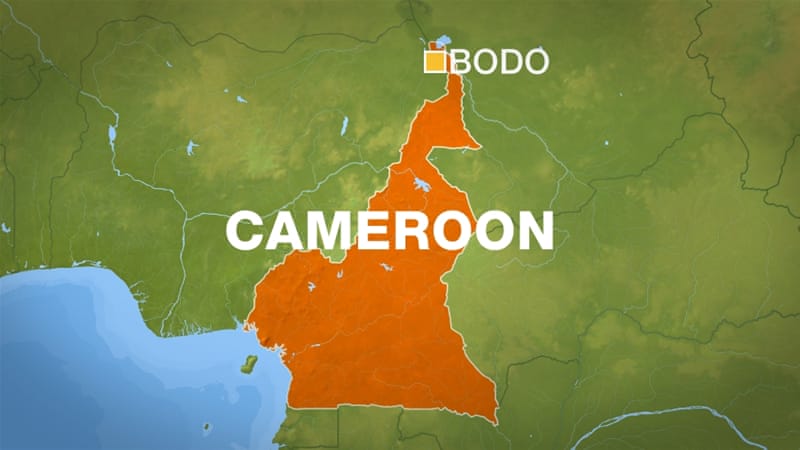
At least 29 people have been killed after at least three suicide bombers carried out a series of attacks at a market in northern Cameroon, Al Jazeera has learned.

The coordinated strikes occurred in the village of Bodo near the border with Nigeria on Monday, a source in Cameroon's military told Al Jazeera. 

The first explosions struck the road leading to the market. The second and third blasts hit the entrance and interior of the marketplace.

It was the second bombing incident to hit Cameroon this year. On January 13, a suicide bomber killed 12 people and wounded at least one other in an attack on a mosque in northern Cameroon.

In December, two female suicide bombers also blew themselves up in Bodo. 

The attacks occurred about 27km from the town of Fotokol, also near the Nigerian border, which had been the subject of previous attacks last year.

No one has claimed responsibility for the latest attacks, but Cameroon and neighbouring countries have been carrying out offensives against the Boko Haram group, which declared allegiance to the Islamic State of Iraq and the Levant (ISIL) in 2015.

Boko Haram's grip on the region has suffered as a result of assaults launched by local armies and a multinational force.

Last December, Cameroon reported killing at least 100 Boko Haram fighters and freeing 900 hostages.

Boko Haram, which wants to implement a strict form of Islamic law in Nigeria's northeast, has launched attacks in Nigeria and neighbouring countries including Cameroon over the past few months.

The group was using Cameroon's impoverished far north to stockpile supplies and recruits until the government crackdown last year.

Cameroon is part of an 8,700-strong regional force led by Nigeria against the group. The United States has contributed military supplies and troops for assistance.

On Monday, the United Nations and partners are appealing for more than $820 million to help refugees and others affected by violence in Cameroon, Nigeria and Central African Republic.

Boko Haram's six-year fighting has killed about 20,000 people and displaced 2.3 million, according to Amnesty International and the UN.
 Source: Al Jazeera

Corruption, threat to democracy –Buhari


President Muhammadu Buhari has identified corruption as the worst threat to Nigeria’s democracy, noting that the task of nation building rests primarily on the political elite.  Buhari pointed out that leaders of advanced democracies have conquered the urge for primitive acquisition of wealth and have rather settled for service.

The president, who spoke through his deputy, Prof. Yemi Osinbajo when he declared open the maiden annual political summit in Abuja, charged participants at the summit to evolve a moral elite that is prepared to make sacrifices and serve above self, adding that what Nigeria needed at the moment was leadership with ethical compass.

“Democracy cannot heal the terrible human defect if politicians demand and take bribe, steal the money meant to provide drugs for our hospitals, schools for our children and roads for all,” he said. 

Buhari expressed sadness that the people’s dream to choose their leaders, has been thwarted by corrupt practices including purchase of votes. He commended the organisers, Save Democracy Group Africa for creating the platform for continued dialogue for political actors across party lines.

Senate President Bukola Saraki and Speaker Yakubu Dogara in their separate remarks pledged the support of the National Assembly in the fight against corruption, noting that there was need for sacrifice across board.

“The days of business as usual are over. Reckless spending of government’s resources, expenditures not budgeted for, procurement abuses and diversion of public monies for personal gains must be eradicated. As part of our agenda, the National Assembly is strengthening her oversight systems to ensure procedural and output integrity. All public spending must be within the Appropriation Act. We can no longer afford waste,” Saraki said.

Source: THE SUN

Nigeria, Iran Clash Over OPEC Emergency Meeting


 With the global economy reeling from plunging oil prices occasioned by massive over production, Nigeria, a key member of the Organisation of Petroleum Exporting Countries (OPEC), which depends hugely on oil revenue for its foreign exchange, has requested an emergency meeting to discuss steps to possibly cut down oil production and prop up oil prices.

But Nigeria’s call has been opposed by Iran, another prominent OPEC member, which claimed that the time is not yet right for such an intervention.

Minister of state for petroleum resources, Dr Ibe Kachikwu, made the call for an OPEC emergency while speaking at a panel session at the ongoing World Economic Forum at Davos, Switzerland, adding Nigeria’s voice to those of OPEC members, such as Venezuela, that are requesting an emergency meeting of the oil-producing nations to address the current oil crisis.

Speaking at the session, Kachikwu stated that with the oil industry in its current state, the members of the OPEC, which produce about one-third of the world’s oil, needed to do something proactive soon.

He said, “There is a lot of energy around trying to meet earlier. Obviously, some of that is a panic reaction. Do we just sit back and watch? Or do we put more efforts in talking to countries, like Russia, to try to get some consensus of what we need to be doing?”

However, Iran disagreed with the premise of an emergency meeting as the country’s oil minister, Bijan Zanganeh, stated that the organisation currently has little intention of making a drastic change.

“There should be an intention to make a firm decision in such a meeting; otherwise, the meeting will have negative impacts on world oil markets. The important thing is that there must be an intention for change, but we have not yet received such a signal,” the oil minister said, according to Reuters.

As the global economy heads for what is potentially a very volatile year, analysts have said that OPEC, which requires a consensus from all its members before it initiates a change, has to make a decision very soon.

Following the crash of oil price from an average of $114 a barrel in 2014 to less than $30 a barrel presently, Nigeria’s economy, as well as those of many other oil-dependent countries, has had an economic depreciation. Nigeria’s budget is benchmarked at $38 per barrel of oil as the country needs oil price to rally to fund its budget.

Some OPEC members such as Venezuela had called for emergency meeting but others such as Saudi Arabia, said to have an eye on the happenings in Iran as regards oil production, is yet to make a categorical statement on the matter.

Following the ongoing rift between two Middle East heavy weights, Iran and Saudi Arabia, over the execution of Iran’s top cleric, Sheikh Nimr Al Nimr, the Iranian ambassador to Nigeria, His Excellency Saeed Koozechi has said that there’s no tension as such between both countries.

Speaking in an exclusive interview with LEADERSHIP, the envoy stated that even though Iran was very unhappy with Al Nimr’s execution by Saudi Arabia, both countries are not having a regional conflict.

He also stated that the Islamic Republic of Iran also regretted the burning of the Saudi Embassy in Tehran, saying some hoodlums took advantage of the situation by taking the laws into their hands.

“We condemn the unfortunate situation in very strong terms and we are happy that the police was able to put the situation under control and no Saudi diplomat was injured in the incident.

“In fact, over 60 arrests have been made while the matter is being investigated and the culprits will soon be charged to court’’, he added.

On how the country is taking the severing of links by Saudi and some other countries with Iran, he said it is regrettable that Saudi Arabia was too quick in reacting the way it did, adding that it was proactive and also encouraged other countries to do same.

Koozechi said he expected Saudi Arabia to have been more thoughtful and logical about the issue, instead of trying to overshadow their wrong doing.

He said that although the executed cleric was a reformist and a critic of some of Saudi Arabian government’s policies, he never did anything to counter the security of the country to warrant the treatment meted out to him.

He recalled that Al Nimr was arrested four years ago and was until his execution in detention, stating that the Iranian government was not aware if he had the services of a lawyer to defend him in court before his execution.

Oil prices fell three per cent yesterday as Iraq announced record-high oil production, feeding into a heavily over-supplied market.

Iraq’s oil ministry said oil output had reached a record high in December. Its fields in the central and southern regions produced as much as 4.13 million barrels a day, the government said.

The oversupply has wiped out much of the gains made in one of the biggest-ever daily rallies last week. Brent crude, the global benchmark, was down 83 cents at $31.35 a barrel at 1247 GMT, losing 2.6 per cent from its closing price on Friday, when Brent surged 10 per cent. U.S. crude traded 85 cents lower at $31.34 a barrel. A senior Iraqi oil official said the country might raise output even further this year.

“The news that Iraq has probably hit another record builds on the oversupply sentiment,” said Hans van Cleef, senior energy economist at ABN Amro in Amsterdam.

“The oversupply will keep markets depressed and prices low, and on the other hand short positions are in excessive territory.”

The closing of large amounts of short positions had caused a huge rally on Friday that was largely undone again on Monday, creating huge volatility in the oil market.

In a sign that investors expect oil prices to rebound, data from Intercontinental Exchange showed speculators raised net positions of Brent crude in the week ending January 19. Fundamental factors remained bearish. Indonesia’s OPEC governor said support among the Organisation of the Petroleum Exporting Countries (OPEC) for taking steps to prop up crude prices is slim. The governor said only one OPEC country supported an emergency meeting over the matter.

Striking a more bullish tone, the group’s Secretary-General Abdullah al-Badri said at a separate event in London that he saw some signs the market was rebalancing. He also said OPEC and non-OPEC producers needed to work together to tackle oversupply in order to prop up oil prices. The chairman of Saudi’s Aramco said on the sidelines of a different conference on Monday that oil prices would ultimately balance at a moderate level as demand continued to rise. In the U.S., one of OPEC’s largest production rivals, a further drop in the number of oil rigs was expected to weigh on output. U.S. investment bank Goldman Sachs said it expected production to decline by 95,000 barrels per day in 2016, including well deferrals, higher than previously assumed.

OPEC Sec-Gen Urges Non-OPEC To Help Clear Oil Stocks Overhang

OPEC and non-OPEC oil producers need to jointly tackle global stocks overhang to enable oil prices recover with investments in new fields, OPEC secretary-general, Abdullah al-Badri, said yesterday.

“It is vital the market addresses the issue of the stock overhang. As you can see from previous cycles, once this overhang starts falling, then prices start to rise,” he told a conference in London.

“Given how this developed, it should be viewed as something OPEC and non-OPEC tackle together. Yes, OPEC provided some of the additional supply last year, but the majority of this has come from non-OPEC countries,” he noted. He said it was crucial that major producers came up with a solution, as the market needed to see inventories come down to levels that would allow prices to recover and encourage investments. “The current environment is putting this future at risk. At current price levels, it is clear that not all of the necessary future investment is viable,” he said.

Source:  LEADERSHIP

Metuh gave me $2m cash to invest, says woman

The Economic and Financial Crimes Commission on Monday called two out of the 18 witnesses it lined up against the National Publicity Secretary of the Peoples Democratic Party, Chief Olisa Metuh, with respect to the charges of money laundering involving the sum of N400m which he allegedly collected from the Office of the National Security Adviser in November 2014.

The trial commenced before a Federal High Court in Abuja after the presiding judge, Justice Okon Abang, overruled a request for an adjournment by Metuh’s lead counsel, Mr. Onyechi Ikpeazu (SAN), who had sought time to enable him and his team to have access to some documents and prepare better for the defence.

The ruling by Justice Abang, dismissing the request for adjournment, paved the way for the prosecution to call its first witness, Nneka Ararume, an employee of Asset and Resource Management Company Limited, who narrated how Metuh gave her $2m cash at his house in Prince and Princess Estate, Abuja.
Ararume, who described his position at ARM as Wealth Manager, said she collected the cash from Metuh on December 2, 2014, with an instruction to invest the money on behalf of the PDP spokesperson’s company, Destra Investments Limited.

She said ARM had been managing Destra’s funds before she joined the financial services company in April, 2013.

Before the trial commenced on Monday, Ikpeazu had informed the court that his client had “laboured” unsuccessfully to meet the bail conditions imposed by the court on January 19, and had applied for the variation of the terms.

The court ruled that the application could not be heard on Monday since it was only served on the prosecution in the open court on Monday morning.

Ikpeazu asked for an adjournment of the case on the grounds that he was only served in court with the prosecution’s additional proof of evidence containing the statement of the EFCC witness who investigated the case.

Citing the rights to fair hearing which an accused person was entitled to under Section 36 of the Constitution, he added that he needed time to meet with Metuh, whom he said was assumed would have been able to fulfill the bail conditions by Monday.

Ikpeazu stated that the defense needed time to get some documents, including the statement of account of the PDP spokesperson.

The lead prosecuting counsel, Mr. Sylvanus Tahir, opposed the application for an adjournment, insisting that the accused had been given enough time to prepare for his defense since he had been served with the charges and other necessary documents since January 14.

The judge agreed with the prosecution but ruled that the prosecution must not call on Monday the witness whose statement was only served on the defense in court.

When the trial commenced, Ararume, who said she managed Destra Investments Limited funds with ARM, explained that she proceeded to change the $2m, which she collected from Metuh, to its naira equivalent through two bureau de change operators.

Ararume, who was led in evidence by Tahir, said on December 2, 2014, which was about 11 days after N400m was allegedly paid into Destra’s Diamond Bank account by the Office of the NSA on November 22, 2014, Metuh invited her to his home at Prince and Princess Estate in Abuja, asking her to come along with her companies brochure on different types of investments available.

She said, “Metuh gave me the sum of $2m in $100 bills. It was taken to bureau de change operators, who would then transfer the money to ARM. From there (Metuh’s house), I proceeded to Mr. Sie Iyenome’s office at Wuse 2, where I gave him the sum of $1m.

“I also invited Mr. Kabir Mohammed and I also gave him the sum of $1m to transfer the naira equivalent in favour of Destra Investment Limited.

“Later on the same day, December 2, 2014, Mr. Kabir and Mr. Sie Iyenome confirmed the receipt.”
The defense also sought an adjournment after Ararume completed her testimony.

But Justice Abang upheld the prosecution’s objection to the request for an adjournment, which was basically anchored on the same grounds earlier canvassed by the defence.

Under cross-examination by the defense counsel, Ararume said Destra, owned by Metuh, had been ARM’s client before she was employed by the financial services company in April 2013.

The witness answered negative when asked if she knew “how long it took the defendants to accumulate the money he gave you”.

The EFCC also called Iyenome, one of the bureau de change operators engaged by Ararume to change $1m out of the total $2m she received from Metuh to naira.

Iyenome said he never knew Metuh but only got to know of his company, Destra, on December 2, 2014, when Ararume forwarded the company’s account details to him for the payment of the naira equivalent of $1m he received from her.

Under cross-examination, the witness, who said he believed he was carrying out “a valid transaction”, also told the court that it was the practice in the foreign exchange business to ask for the purposes which funds, brought by customers, were meant for.

He said, “Most times the question for the purpose the money is meant is done verbally, just for due diligence.

“This was a brokering transaction. I’m not the one using the dollar. Even at that, I asked who was selling and Nneka said it was her client at ARM, which was as good as a bank was selling to you.”

Under re-examination by the prosecutor, Iyenome confirmed that there was a limit imposed by law as to how much cash a bureau de change operator could transact with.

He said, “I am aware of some, I can’t name all of them. I’m aware that to sell to an individual travelling outside the country, the limit is $4,000, and for a business, the limit is $5,000.”

Justice Abang adjourned further trial till Tuesday with an instruction to the prosecution that all the prosecution witnesses must be present in court. He fixed Wednesday for the hearing of Metuh’s bail variation application. 

Meanwhile, the National Legal Adviser of the PDP, Mr. Victor Kwon, said the party had nothing to do with the bail conditions set for Metuh, the party’s spokesman.

Kwom explained that friends, colleagues and associates of Metuh had intensified efforts to get sureties required by the court and secure Metuh’s release from prison.

In an interview with one of our correspondents on Monday, Kwom said, “The party has nothing to do with the bail, because we were not asked to come and stand as surety for him.

“Like I said, his friends, associates, colleagues and family members are looking for sureties that will meet the bail conditions.

The EFCC is prosecuting Metuh and Destra Investments Limited on seven counts of money laundering and fraudulent receipt of N400m from the Office of the NSA on November 22, 2014, for the PDP’s campaign activities.

The prosecution alleged that the N400m was “part of the proceeds of an unlawful activity” of the immediate past NSA, Col. Sambo Dasuki (retd).

In counts one and two, the EFCC alleged that Metuh and Destra Investments Limited “took possession” of the sum of N400m from the account of the Office of the NSA with the Central Bank of Nigeria without contract award and converted the money.

The prosecution also alleged in count four that sometime between November, 2014 and March, 2015, Metuh and the firm used the said N400m for the campaign activities of the PDP and other purposes while “having reason to know that the money directly represented proceeds of an unlawful activity of Colonel Mohammed Sambo Dasuki (retd).”

Source: PUNCH


LASSA FEVER: symptoms, prevention, treatment

                                                                  Prof-Oyewale-Tomori

According to Dr. Ejike Orji, a virologist and immediate past chairman of the Guild of Medical Directors, Abuja, Lassa fever is asymptomatic   and the process of detecting the virus is complicated. The incubation period is about 6 to 21 days.

“The virus is very acute and can affect all the organs of the body.  Carriers might be complaining of fever, muscle pain, fatigue and occasionally muscle swelling. They could also complain that their eyes are red and that is because of itching since Lassa causes haemorrhagic fever”.

Speaking further, Dr Orji said because of the haemorrhagic nature of the virus, it can also affect the gastrointestinal tracts so much so that an affected person might present with cases of nausea and vomiting which may be bloody. He added that apart from a bloody diarrhoea which an infected person is likely to come up with, there might also be some forms of stomach pains and even constipation.  There could also be  evidence of hepatitis.

Also, Lassa fever can affect the cardiovascular system as it might lead to hypertension or hypotension, causing the blood pressure to be high or low and the victim would have abnormal high range.  Another grim picture of the virus is that the brain is not spared.  Lassa fever can affect the brain or the nervous system and it might mimic meningitis.

“The respiratory system is also at risk as an infected person can also come down with cough, chest pain and difficulty in breathing”, Dr Orji added.

Treatment

Being a haemorrhagic fever which is viral in nature, the Lassa virus is diagnosed by doing a laboratory test in a test centre.

Dr.  Orji said the first step in the treatment of a carrier of the virus is admitting and isolating the person, while also ensuring that the patient’s body fluid and excreta are properly disposed in order to prevent the spread.

“For people to have a chance of survival, there must be early and aggressive treatment with a drug called ribavirin and of course the normal treatment you give to patients. There is also a drug we call interferon which can boost the immune system.

“The normal treatment for people who have such viral infection is you must make sure you test the person and ensure the patient has enough (intravenous) fluids.  Also if the person has bled so much, there might be need for some level of transfusion.”

Prevention

Being a viral infection, which can be easily spread, medical practitioners have always harped on prevention as the best form of treatment.  Preventive measures in this regard refer to making efforts to control the rat population around the house, while also ensuring that no food is exposed to rodents since the urine and body fluid of rodents are the key things which cause Lassa fever transmission.

“Some people eat rats; those people should be discouraged because transmission could happen when it is being prepared. It is just like we told people not to eat bats and bush meat during the Ebola period so people must make sure that they prevent contacts with rats and then they should cover their food very well”.

For those who also like to gulp down canned drinks without running a careful check, there could also be a grim picture as using a tissue paper to clean the opening  is not enough to safeguard against the virus. For it to be safe for drinking, there would be need to use soap and water, the medic added.

“I always tell people not to drink directly from a canned drink.  It can be dangerous because you don’t know whether rodents have urinated on them in the process of storage.  It is important that we use soap and water to clean the openings of those things before they are served to people”, Dr Orji submitted.

He added that another  way of treating the virus is to get a person who has survived it since the anti-body can be used to treat someone that has the disease.
                                                                   Dr Lazarus Eze

Also commenting on the issue, Dr Lazurus Eze, an Abuja-based public health physician,   canvassed for government to ensure a safer environment by ensuring a timely and regular waste disposal  and management in order to curb the spread of the virus.

For him, Lassa fever can be prevented by keeping a clean environment and practising good personal hygiene. He harped on the need for individuals to ensure proper refuse disposal and avoid dumping of refuse in drainages and indiscriminately.

“Lassa Fever is a viral haemorrhagic fever caused by multimammates rats (Mastomy natalensis). The rats may transmit the virus to our uncooked food. Government at all levels should provide leadership and coordinate efforts to prevent further spread of Lassa fever. Health education at the community level, behavioural change, communication and proper waste management are effective primary prevention measures,” he asserted.

Furthering, Dr Eze called on government at all levels to provide leadership and coordinate efforts to prevent further spread of Lassa fever.

“Health education at the community level, behavioural change, communication and proper waste management are effective primary prevention measures”, Dr Eze said.

Measures for health care workers

Both medical practitioners also harped on the need for health workers treating the virus to be careful by observing universal precautionary methods and treating every fever with suspicion.

“We know that in Nigeria, a lot of illnesses are due to Malaria, but now we have had Ebola and now we have Lassa so any health care personnel should manage feverish conditions with a lot of suspicion and maintain all universal precautions in terms of protecting themselves and then the other thing is making sure the patient is properly isolated, said Dr Orji.

Dr Eze on his own part urged that personal protective equipment must be provided for health workers who are expected to observe universal precautions and best practices.

Lassa fever and garri consumption

Speaking on the likelihood of being infected with the virus through garri, fruits and other uncooked food items, Prof Oyewole Tomori, a former regional virologist for the World Health Organisation (WHO) and president of the Nigeria Academy of Science, confirmed that any food eaten raw or uncooked and contaminated with urine, blood, etc of a Lassa virus infected rodents can be a source of infection.

“Our food can get contaminated and if you eat without cooking, the possibility of getting infected is high. Once you cook the food items, you destroy the virus, so people smoking garri and all those kind of things are at risk. If the rodents urinate on the fruits and you pick up banana or carrot and you just start chewing it without washing, that could be dangerous, so it boils down to hygiene and cleanliness”.

Source: THE NATION

Current account holders to pay maintenance charges

Bank customers are to pay a maintenance fee on current account transactions, the Central Bank of Nigeria (CBN) announced at the weekend. The new fee is a negotiable current account maintenance fee not exceeding N1 per mille (N1 per N1,000,000) may be charged in respect of all customer-induced debit transactions.

CBN’s Financial Policy and Regulation Department Director Kelvin Amugo, who announced the fee through a circular to banks, said that the CBN was not oblivious of the impact of declining crude oil prices, operation of Treasury Single Account, and some other market turbulence on the viability and stability of the banking system.

In a circular titled: “Introduction of Negotiable Current Account Maintenance Fee not Exceeding N1/mille”, Amugo explained that the new fee was introduced in the interest of stability of the banking system.
The fee came weeks after the regulator struck out Commission on Transaction (COT) fee, which contributed significantly to lenders’ profitability.

He said the Revised Gide to Bank Charges (RGBC), which came into effect on April 1, 2013 provides for a phased elimination of COT charges. Under the guidelines, a zero COT regime was to come into effect from this month.

“The CBN noted that while the gradual phase out was being observed, some banks continued to charge account maintenance fees in addition to the reduced COT rate, which in effect amounted to double coincidence of charges,” he said.

Amugo said the negotiable current account maintenance fee was in furtherance of the mandate to promote and safeguard a sound financial system. He reminded lenders that 2016 zero COT regime as jointly agreed during the 311th Bankers’ Committee meeting of February 12, 2013 had come into effect and must be complied with.

The CBN, last week, started the implementation of the N50 stamp duty payment on every N1,000 transaction. The CBN said the policy was in line with the provisions of its enabling laws. It pointed out that with immediate effect, all banks and other financial institutions shall start charging N50 per eligible transaction in accordance with the provisions of the Stamp Duties Act and the Federal Government Financial Regulations 2009.

The CBN stressed that all receipts given by any bank or other financial institutions in acknowledgment of services rendered in respect of electronic transfer and teller deposits from N1, 000 and above should be charged.

 However, the bank pointed out that payments deposits or transfer by self to self whether inter or intra bank and any form of withdrawals/ transfer s from savings accounts should not be charged. The charges are only payable by receiving accounts.

Source: THE NATION