AfDB and Nigeria’s Federal Government to spend US $300m on youth agriculture scheme

The African Development Bank (AfDB) and the Federal Government of Nigeria are planning for long-term solutions to youth employment in the agricultural sector. They will spend about US $300 million on the Enable Youth Empowerment Agribusiness Programme. 

The project is to be implemented in partnership (AfDB with Nigeria’s Federal Ministry of Agriculture and Rural Development) within 18 months. “AfDB’s Director of Agriculture and Agroindustry, Chiji Ojukwu disclosed this information, recently in a top level meeting with Nigeria’s agricultural authorities, in Abuja”, The Nation reported. 

The scope and impact of this initiative would create 250,000 jobs; the beneficiaries would be trained at various incubation centres on all aspects of value chains, with each beneficiary of the project supported with about US $75,000. 

Ojukwu said the three-year project would enable training and funding of young graduates, who are interested in farming across the country. “A total of US $300 million would be accessed to cover the three year project which would bring young graduates together and train them for 18 months as entrepreneur farmers.” 

In a statement by the ministry’s Director of Information, Tony Ohaeri, the Agriculture Minister, Chief Audu Ogbeh disclosed that the project would commence from the three Federal Universities of Agriculture in the country. 

“The initiative would create 250,000 jobs; the beneficiaries would be trained at various incubation centres on all aspects of value chains, with each beneficiary of the project supported with about US $75,000. The project would cover the 36 states including the FCT, while the Agricultural transformation Agenda (ATA) would be expanded through the processing zones.” 

The Minister, in his remark, emphasized the need for the three universities of agriculture in Umudike, Makurdi and Abeokuta respectively to revert back to the provisions of the Act that established them.
Ogbeh advised the country to re-invent her own economic strategy to revive its economy. 

He stated that the strength of a nation lies in the population of the youth and expressed con
cern on the rate of youth unemployment in the country saying, “We need to take care of them before they take care of us.” 

He promised to collaborate with representatives of AfDB and International Institute of Tropical Agriculture (IITA), who came to present him the concept note on the youth agriculture scheme. 

However, the Minister tasked IITA to intensify efforts towards researching into the conversion of cassava leaves into animal feeds, while some components of the Labour Intensive Family Enterprise (LIFE) of the ministry could be built into the youth empowerment initiative. 

IITA Director-General, Nterayana Saginga, called for a change in the mindset of the young graduates, saying that the IITA’s experiment in the past on young unemployed graduates revealed that they could make good turn over on their investments. He pledged the readiness of IITA to provide necessary support to the ministry.
Farmers in Cameroon to benefit from US$25.70 million for AfDB rural infrastructure and development support project

Farmers in the North-Western region of  Cameroon will benefit from a loan and a grant amounting to US$25.70 million (UA 16,800 million) approved by the African Development Bank’s Board of Directors to help finance the Grassfield Rural Infrastructure and Participatory Development Support Project, Phase II 

The Project aims to improve agricultural production and incomes of beneficiary communities by creating rural infrastructure and building capacity. It will help to reduce poverty in the rural communities in the area covered by the project. 

The project will be implemented in Cameroon’s North-West region, which has a population of 1,850,000 and a poverty rate of 51%, and is home to 13% of the total number of the rural poor. 

As a continuation of the first phase of the project from 2005-2011, the operation will be implemented in basins with strong production potential, namely Widikum, Santah/Tubah, Gayama and Mbaw/Mbonso covering 8 of the region’s 36 council areas, with a concentration on the first two to maximize impact. It will help to improve agricultural production and the incomes of the beneficiary communities by creating rural infrastructure and building the capacity of the actors. The estimated outputs are: (a) irrigation development on 610 ha; (b) rehabilitation of 278 km of rural roads; and (c) establishment of socio-economic support facilities and capacity building for the different partners. 

At least 250,000 people (producer organizations, processors, traders, councils, etc.), half of whom are women grouped in 50,000 households will benefit from the project. It is expected to raise agricultural production by about 37,000 tonnes as well as an annual increase in income per producer from CFAF 250,000 in 2013 to CFAF 357,910 in 2018, and CFAF 477,210 in 2024. 

The project has the potential for a high degree of complementarity with the Bamenda–Enugu Corridor Project financed by AfDB, which will help to increase trade with Nigeria, Cameroon’s neighbour to the west. The project will also scale up actions carried out under the Institute of Agricultural Research for Development (IRAD’s) basic seed production operation financed by a Nigeria Technical Cooperation Fund (NTCF) grant. 

Through the establishment of a market information system that will be a major decision-making tool, the project will help to generate knowledge. It also envisages the adoption of an innovative approach involving the implementation of a pilot activity to establish an information system platform on agricultural markets called ‘AgriTechnology Cameroon (ATC)’. It will be based on the use of mobile telephony services (SMS) and other media for real time dissemination of information and appropriate services. 

In the longer term, the project will result in the revitalization of agricultural production development and an approximately 25% reduction in poverty in the country’s North-West Region. 

The project will be implemented in five years from April 2014, and will have over 250,000 direct beneficiaries half of whom are women in 50,000 households plus transporters and traders. In addition, it will help to build the capacity of cooperatives, agricultural professional associations and regional and local technical administrations. At full development, the project will increase agricultural production by about 37,000 tonnes in the intervention area. The beneficiaries will participate through the planning, implementation and management of the different activities. 

The project’s total cost is estimated at UA 25.600 million. It will be jointly financed with resources from the ADF loan and grant amounting to 16.800 million (CFAF 12,563 million) representing 66% of the project’s total cost.  The Government of Cameroon will provide the remaining UA 8.80 million.

Cameroon: Three Journalists Face Military Trial in Cameroon

The Committee to Protect Journalists calls on Cameroonian authorities to drop all charges against three journalists for failing to disclose information to the state. The three are scheduled to stand trial before a military court on Friday.

Baba Wame, president of the Association of Cyber Journalists, Rodrigue Tongue, a reporter who formerly worked for the privately owned daily Le Messager, and Félix Cyriaque Ebolé Bola, a reporter for the privately owned daily Mutations, will appear in the military court in Yaoundé on charges of "non-denunciation," Denis Nkwebo, president of the Cameroon Journalism Trade Union, told CPJ.

"Journalists should not be required to disclose information they uncover in their work or act as police informers," said CPJ Africa Program Coordinator Sue Valentine. "The government should immediately drop these charges against Baba Wame, Rodrigue Tongue, and Félix Cyriaque Ebolé Bola, and allow all journalists to do their work without fear of prosecution."

The journalists were first charged with failing to disclose information that could harm national security on October 28, 2014, according to news reports. According to the news website Camer.be, they had found allegations that members of the security forces were colluding with the leader of an armed group from Central African Republic.

When they charged the journalists, prosecutors also issued an order banning them from publishing in the news media and requiring them to register with police weekly. That order expired in January 2015, according to reports.

If convicted, the three journalists face jail terms of between one to five years and a fine between 50,000 and 5 million Central African Francs (US$83 to $8257), according to Amnesty International.

The journalists deny having uncovered any information about any act that could have harmed Cameroon's national security, and maintain that they were bound to protect their confidential sources, the reports said.

West Ham’s Alex Song: I can’t see properly with my protective glasses on

West Ham midfielder Alex Song has revealed that he struggles to see when he plays with his protective glasses on.

The 28-year-old started Saturday’s 2-2 drew with Manchester City wearing his specially-fitted spectacles but quickly discarded them.

The Cameroon international suffers from an eye problem and dons the eyewear to prevent an infection, but it is not an ideal situation as the glasses can be restrictive.

“I have an eye problem so I have to wear the glasses,” he told the Times.
“The doctor said if I caught an infection it would be very bad. It’s not good when I’m playing without the protection.

Song’s condition means he struggles to see in the dark or rain while his vision also fails him when he wears the glasses under a stadium’s floodlights.

“Sometimes I have to play without them because I can’t see properly but it’s a risk.
“I have to be careful because it’s not good for the future. I have to keep wearing them until the doctor tells me not to.

“Today [against Manchester City] was a very hard start to the game and then I took them off because I couldn’t see properly.”

Sergio Aguero’s late strike salvaged a point for City at Upton Park but Slaven Bilic’s side are still well placed in sixth, just six points shy of the top four.

Song’s campaign has been disrupted by injury but he is determined to retain full fitness and help the Hammers during the second half of the season.

“If I’m 100 per cent, I know what I can do. I know I can fly,” he added.
Evening Standard

Bad Quality Fish: Crackdown on Fishermen & Vendors Launched

They use toxic products to fish and plastic material, worn-out tyres to smoke thereby provoking health hazards.

Fishermen have resorted in using toxic products in order to fish more than usual while smoking units and individuals in the smoking sector also use materials like worn-out tyres and plastic containers to smoke fish which puts consumers at risk. The practice that is gaining grounds in some areas of Douala II is not without health hazards.

Following the gravity of the situation, the Sub Divisional Delegate for Livestock, Fisheries and Animal Industry, Alain Ghomsi, led a delegation of sanitary inspectors on the field and began seizing fish so caught or treated and sensitising stakeholders on the effects. To him, consumption of such fish leads to tuberculoses and terminal diseases like cancer. 

Since the practice is mostly carried out by infiltrators without medical and veterinary certificates, Alain Ghomsi advised consumers to insist that vendors should present their certificates before purchasing both fresh and dry fish. In addition to the certificates, vendors must put on aprons or jackets not just to look good but also to prevent diseases from them to the product.

To ensure quality control, the Divisional Delegate of MINEPIA for Wouri, Dr Mimbang Goy Iréne said additional staff were recruited to reinforce daily inspection on the field. They inspect smoking units to make sure that only wood from consumable fruit trees are used and not bad quality wood and materials like plastic, tyres and old dresses as it is the case with some vendors.

The Divisional Delegate intimated that repressive measures will be meted on defaulters following the 2000 law regulating sanitary inspection. Implementing the law to the letter will entail slamming a two to six year jail term with hard labour and a fine between FCFA 50,000 and FCFA five million on perpetuators. Bad quality fish are recognised from the softness, smell, presence of maggots and when they attract flies. In three days, the operation that will run till the end of January, will led to the seizing and destroying of some 35 kg of bad quality fish.

Source: Cameroon Tribune

Putin a 'picture of corruption', US official alleges

Russian president has amassed secret wealth by using state funds for years, US official tells British broadcaster. 

 A senior US treasury official has called Russian President Vladimir Putin a "picture of corruption" who uses state assets for his own personal gain.  

Adam Szubin, acting treasury secretary for terrorism and financial crimes, said in an interview with the BBC's Panorama programme that the Russian president has been amassing secret wealth for years.

"We've seen him enriching his friends, his close allies and marginalising those who he doesn't view as friends using state assets. Whether that's Russia's energy wealth, whether it's other state contracts, he directs those to whom he believes will serve him and excludes those who don't. To me, that is a picture of corruption," Szubin was quoted as saying.

Szubin declined to comment on a 2007 Central Intelligence Agency report that estimated Putin's wealth at $40bn, but he said the Russian leader's stated wealth is an underestimation.

"He supposedly draws a state salary of something like $110,000 a year," Szubin said. "That is not an accurate statement of the man's wealth, and he has longtime training and practices in terms of how to mask his actual wealth."

The Kremlin has denied such allegations. For his part, Putin has repeatedly said he has read press reports about his immense wealth - including that he was even the world's richest man - but he has denied those as nonsense.

The report came just days after a British inquiry concluded that Putin likely approved a 2006 Russian intelligence operation to murder ex-KGB agent Alexander Litvinenko with radioactive polonium-210 in London.

Source: Reuters

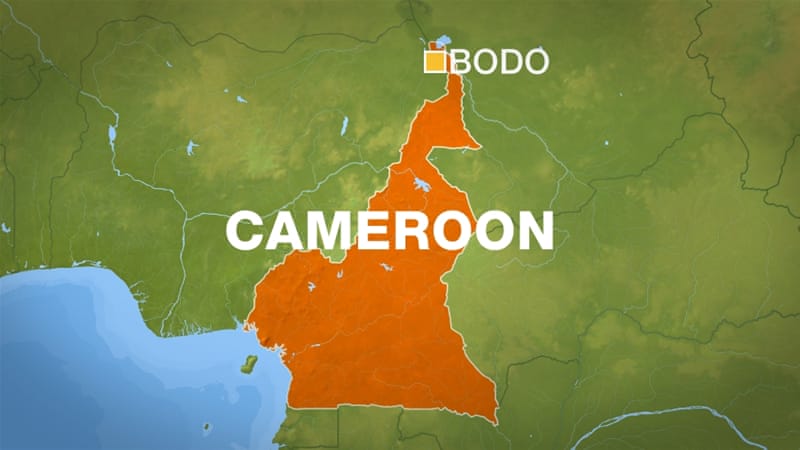
Suicide attackers hit Cameroon marketplace


At least 29 people have been killed after at least three suicide bombers carried out a series of attacks at a market in northern Cameroon, Al Jazeera has learned.

The coordinated strikes occurred in the village of Bodo near the border with Nigeria on Monday, a source in Cameroon's military told Al Jazeera. 

The first explosions struck the road leading to the market. The second and third blasts hit the entrance and interior of the marketplace.

It was the second bombing incident to hit Cameroon this year. On January 13, a suicide bomber killed 12 people and wounded at least one other in an attack on a mosque in northern Cameroon.

In December, two female suicide bombers also blew themselves up in Bodo. 

The attacks occurred about 27km from the town of Fotokol, also near the Nigerian border, which had been the subject of previous attacks last year.

No one has claimed responsibility for the latest attacks, but Cameroon and neighbouring countries have been carrying out offensives against the Boko Haram group, which declared allegiance to the Islamic State of Iraq and the Levant (ISIL) in 2015.

Boko Haram's grip on the region has suffered as a result of assaults launched by local armies and a multinational force.

Last December, Cameroon reported killing at least 100 Boko Haram fighters and freeing 900 hostages.

Boko Haram, which wants to implement a strict form of Islamic law in Nigeria's northeast, has launched attacks in Nigeria and neighbouring countries including Cameroon over the past few months.

The group was using Cameroon's impoverished far north to stockpile supplies and recruits until the government crackdown last year.

Cameroon is part of an 8,700-strong regional force led by Nigeria against the group. The United States has contributed military supplies and troops for assistance.

On Monday, the United Nations and partners are appealing for more than $820 million to help refugees and others affected by violence in Cameroon, Nigeria and Central African Republic.

Boko Haram's six-year fighting has killed about 20,000 people and displaced 2.3 million, according to Amnesty International and the UN.
 Source: Al Jazeera